


The standing wave ratio (SWR) shows the degree of mismatch at the point of measurement. A high SWR is a reason to check the antenna system, but on its own it does not tell you which part is at fault.
Start with the measurement conditions
Make sure the antenna is designed for the band you are using and the meter is suitable for the frequency and power. Check that the meter is connected in the right direction and calibrated as described in its manual.
When testing with the transmitter, use the lowest power that still gives a valid reading, and transmit only where you are licensed to do so.
Inspect the cable and connectors
Stop transmitting and check the connections. A loose connector, damaged cable, corrosion or water ingress can change the readings.
Pay particular attention to sections near windows, at bends and at outdoor mounting points.
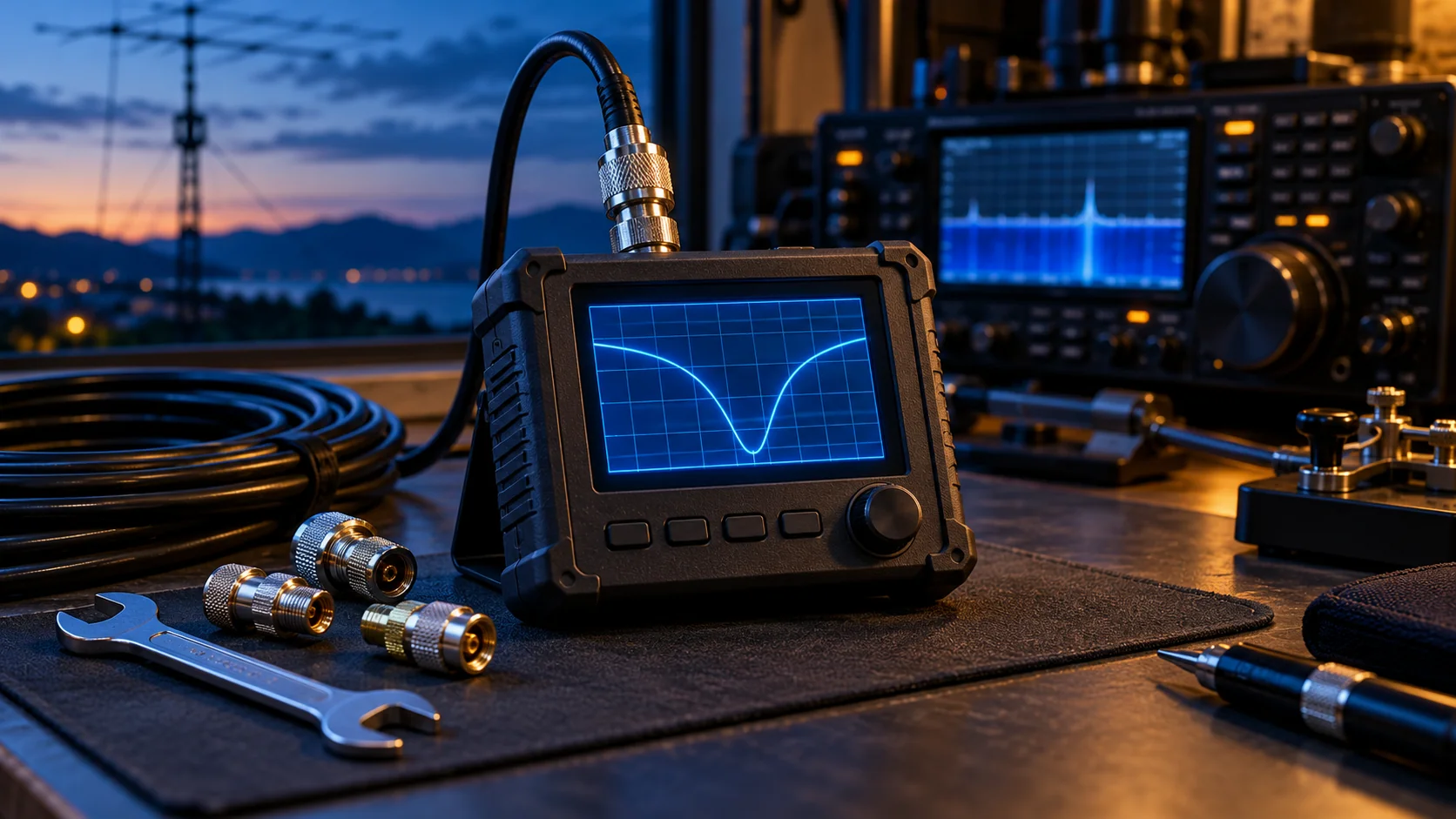
Split the system into sections
A suitable 50-ohm dummy load lets you check the transmitter and meter without the antenna. The load must be rated for the frequency, power and duration of the test.
You can then check the feedline by connecting the load at its far end. A good SWR does not prove low loss, though: a very lossy cable can hide the reflection from the load.
Test the antenna in its operating position
Nearby metal, a change in height and wet surrounding objects can all affect the tuning. Compare measurements with the antenna and cable in the same position each time.
Understand what the tuner does
A tuner can give the transmitter an acceptable match. The mismatch and losses between the tuner and the antenna may still remain.
Write down the frequency, SWR and measurement conditions. These notes help you tell normal changes in antenna tuning from a sudden fault.